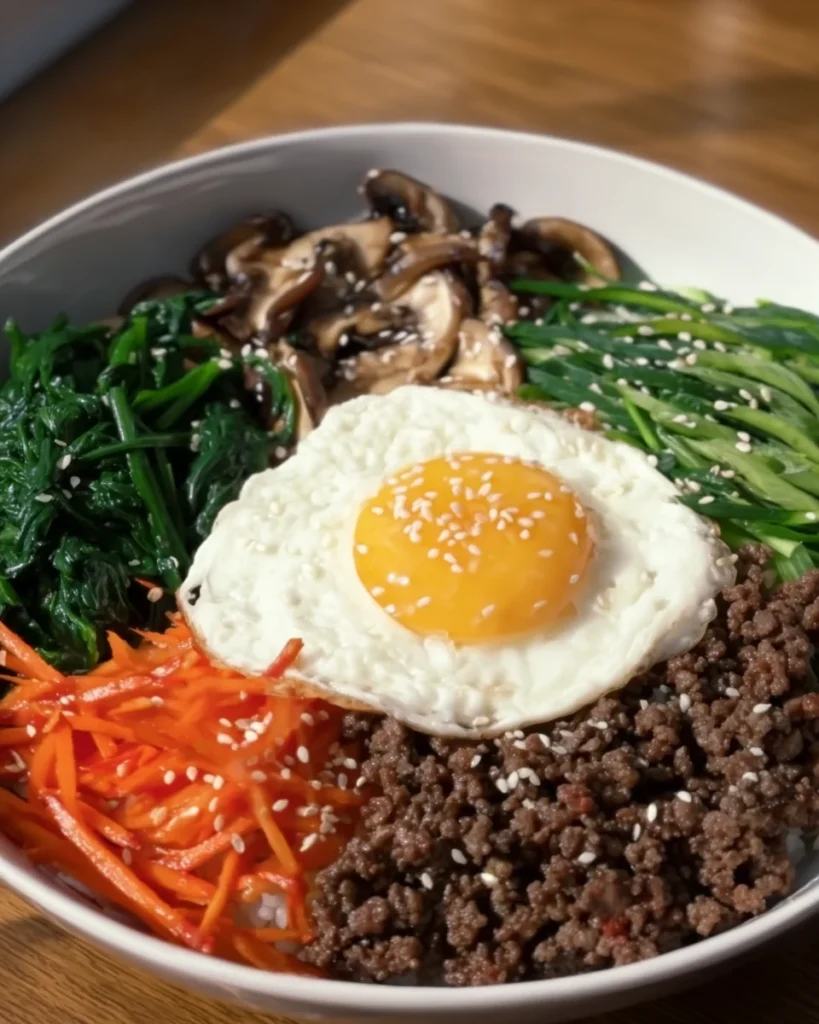
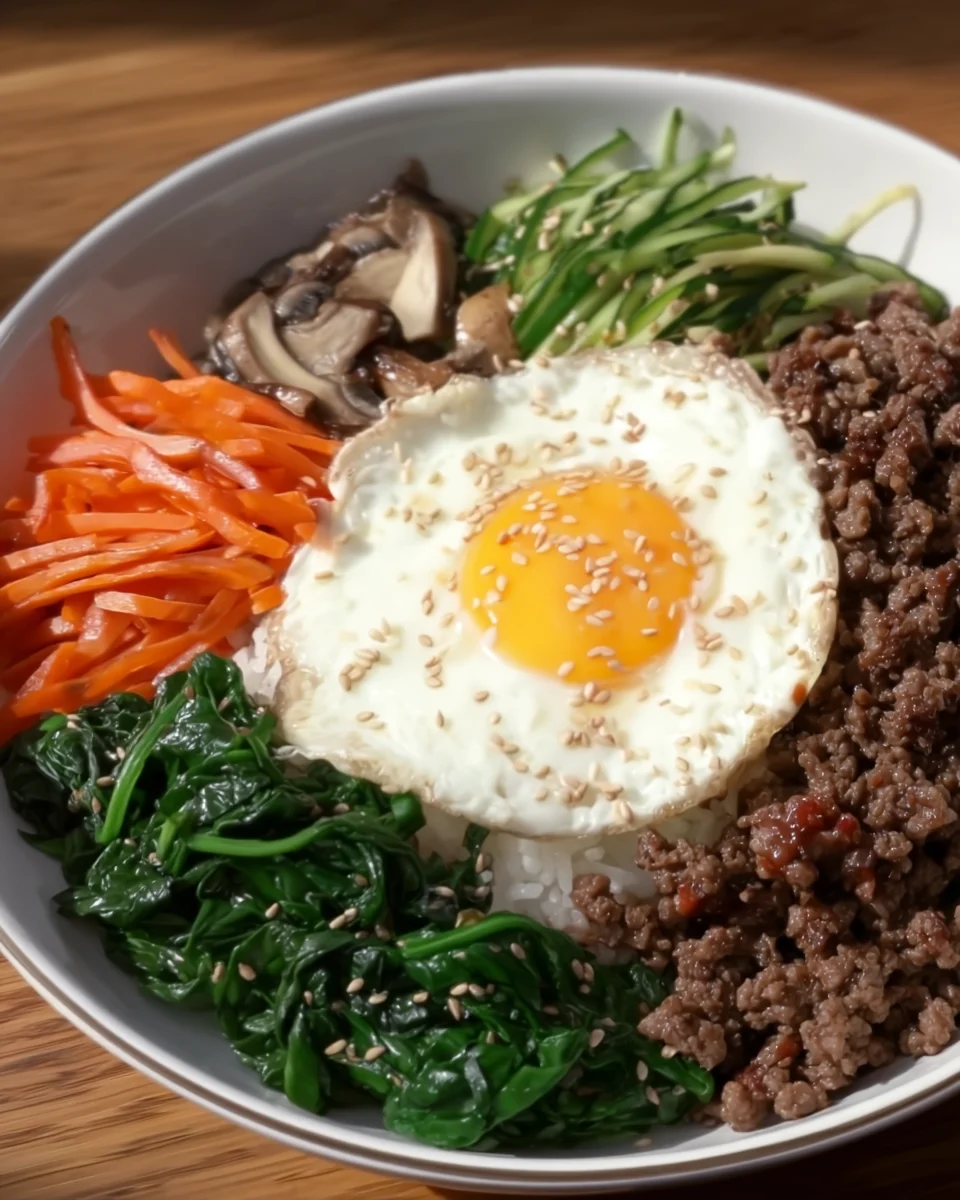
Experience the delightful flavors of Bibimbap with Ground Beef, a traditional Korean dish that combines warm rice, seasoned ground beef, and colorful vegetables. This versatile meal is perfect for family dinners or casual gatherings. Each bite delivers a satisfying blend of textures and tastes, making it a true standout on any table.
Why You’ll Love This Recipe
- Quick Preparation: With only 35 minutes from prep to plate, this Bibimbap is perfect for busy weeknights.
- Flavorful Ingredients: The combination of seasoned ground beef, fresh vegetables, and spicy gochujang creates an explosion of flavor.
- Customizable: Whether you prefer more veggies or different proteins, this dish easily adapts to your taste.
- One-Bowl Meal: Enjoy a complete meal in just one bowl, making clean-up a breeze.
- Healthier Option: Packed with vegetables and lean protein, Bibimbap is a nutritious choice for any meal.
Tools and Preparation
To make your Bibimbap with Ground Beef, you’ll need some essential kitchen tools that will help streamline the cooking process.
Essential Tools and Equipment
- Skillet
- Non-stick skillet
- Cutting board
- Knife
- Measuring spoons
Importance of Each Tool
- Skillet: Ideal for browning the ground beef and sautéing the vegetables efficiently.
- Non-stick skillet: Ensures easy frying of eggs without sticking and simplifies cleanup.
- Knife: A sharp knife makes chopping vegetables quick and safe.
Ingredients
For the Rice
- 2 cups cooked white rice
For the Beef
- 1 pound ground beef
- 1 teaspoon salt
- 1 teaspoon ground black pepper
- 2 tablespoons soy sauce
- 1 tablespoon sesame oil
- 1 teaspoon sugar
For the Vegetables
- 2 carrots, julienned
- 1 zucchini, julienned
- 1 cup spinach, blanched
- 4 shiitake mushrooms, sliced (or any mushrooms of your choice)
For Toppings
- 4 eggs
- 4 tablespoons gochujang (Korean red chili paste)
- 2 tablespoons sesame seeds
- 2 green onions, finely chopped
How to Make Bibimbap with Ground Beef
Step 1: Prepare the Beef
In a skillet over medium heat, add the ground beef. Season with salt, pepper, soy sauce, sesame oil, and sugar. Cook until browned and cooked through, about 5-7 minutes. Remove from heat and set aside.
Step 2: Sauté the Vegetables
In the same skillet, add a drizzle of sesame oil. Sauté the carrots and zucchini until softened, about 3-4 minutes. Add the sliced mushrooms and cook for another 2 minutes. Stir in the blanched spinach and cook for 1 more minute. Remove from heat.
Step 3: Fry the Eggs
In a separate non-stick skillet, heat a little oil over medium heat. Crack in the eggs and fry until the whites are set but the yolk is still runny or cooked to your preference.
Step 4: Assemble the Bibimbap
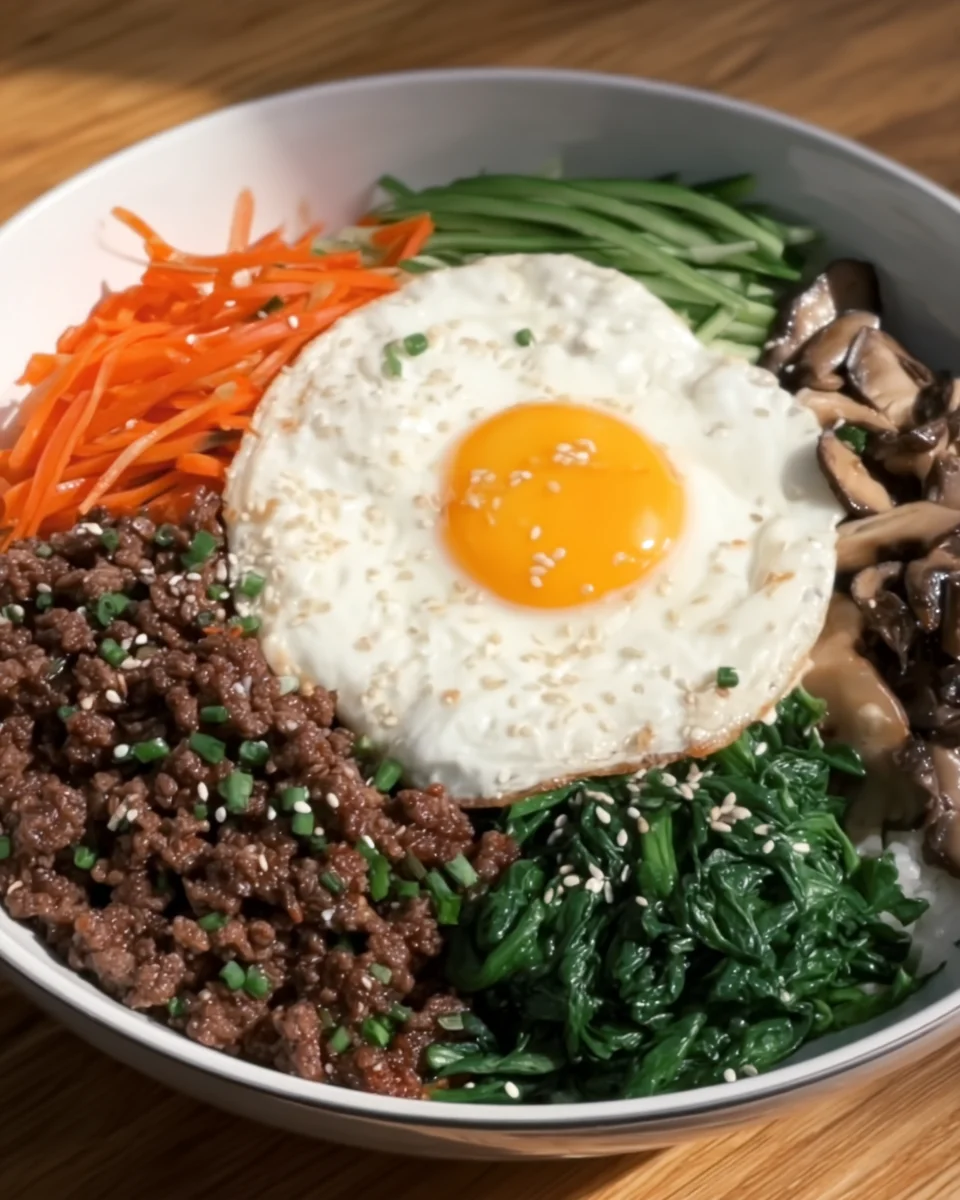
In serving bowls, place a generous serving of cooked white rice. Top each bowl with portions of seasoned ground beef, sautéed vegetables, and a fried egg.
Step 5: Add Toppings
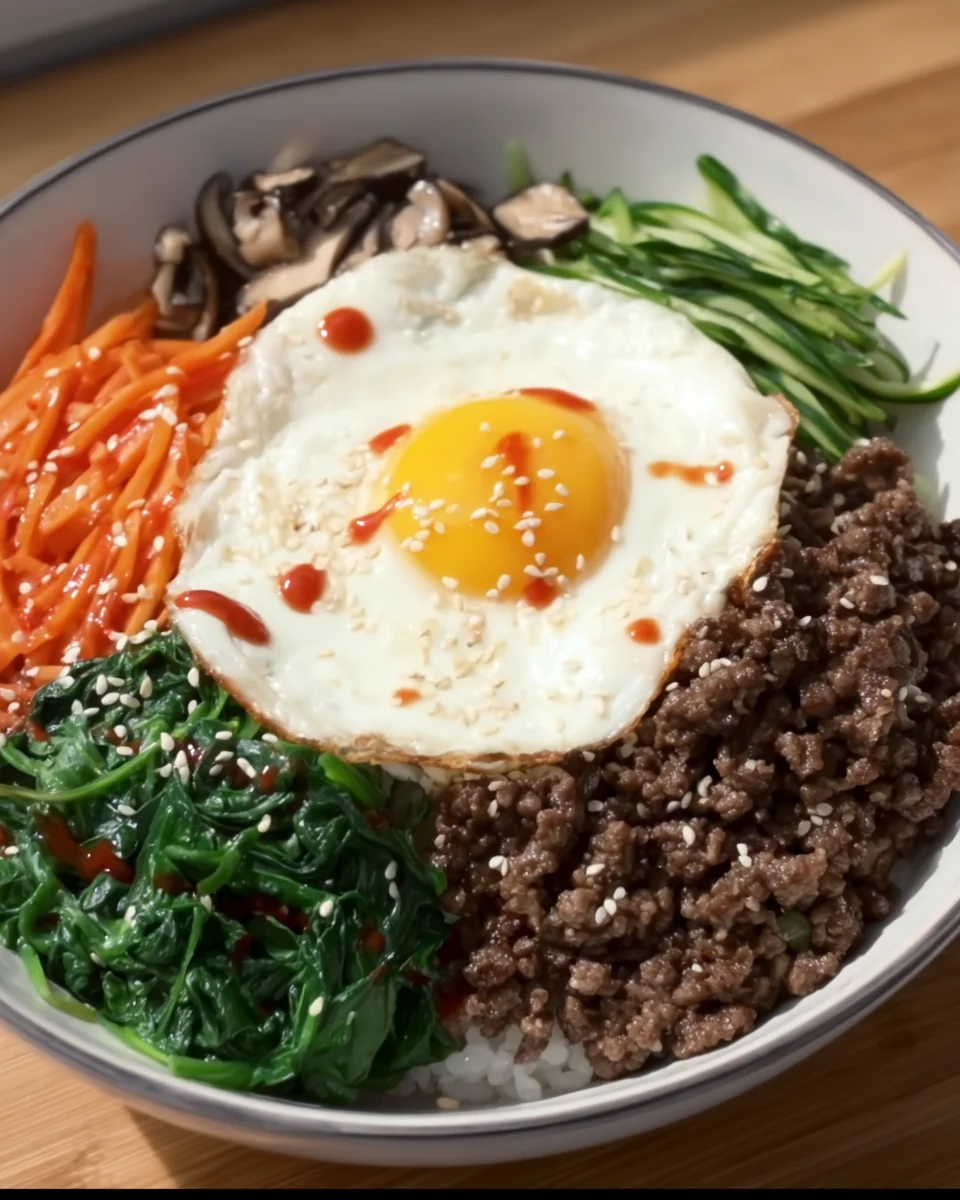
Drizzle with gochujang and sprinkle with sesame seeds and chopped green onions.
Step 6: Serve
Mix everything together before eating to blend the flavors. Enjoy your homemade Bibimbap!
How to Serve Bibimbap with Ground Beef
Serving Bibimbap with ground beef is all about presentation and flavor. This colorful dish not only looks appetizing but also allows for customization based on individual preferences. Here are some creative serving suggestions to elevate your meal.
Create a Vibrant Bowl
- Use a large, shallow bowl to showcase the colorful ingredients.
- Arrange each component (rice, beef, vegetables, egg) in separate sections for a stunning visual effect.
Add Extra Spices
- Offer additional gochujang on the side for those who enjoy extra heat.
- Provide soy sauce or sesame oil for drizzling according to taste preferences.
Include Fresh Herbs
- Garnish with fresh cilantro or perilla leaves to add an aromatic touch.
- These herbs enhance the flavor profile and complement the ingredients beautifully.
Make It a Family Style Meal
- Serve all components in separate dishes and let everyone assemble their own bowls.
- This interactive dining experience encourages creativity and personalization.
How to Perfect Bibimbap with Ground Beef
Perfecting your Bibimbap with ground beef involves paying attention to details that elevate the flavors and textures. Here are some tips to help you achieve the best results.
- Use Day-Old Rice: This helps the rice maintain its texture and prevents it from becoming mushy during cooking.
- Season Generously: Don’t skimp on seasoning the ground beef; it’s essential for infusing flavor throughout the dish.
- Cook Vegetables Separately: Sautéing each vegetable individually ensures that they retain their unique flavors and textures.
- Control Egg Doneness: Fry the egg to your preference—whether runny or fully cooked—to cater to different tastes in your household.
- Balance Flavors: Adjust the amount of gochujang based on your spice tolerance; balance it with sugar or sesame oil if needed.
- Garnish Thoughtfully: Use sesame seeds and chopped green onions as toppings for added crunch and freshness.
Best Side Dishes for Bibimbap with Ground Beef
Pairing side dishes with your Bibimbap can enhance the dining experience. Here are some delicious options that complement this flavorful meal perfectly.
- Kimchi: A traditional Korean side dish made from fermented vegetables, often cabbage; adds tangy and spicy notes.
- Korean Pickled Radishes: These crunchy pickles offer a refreshing contrast to the rich flavors of Bibimbap.
- Japchae: Sweet potato noodles stir-fried with vegetables and meat; provides a chewy texture that’s delightful alongside Bibimbap.
- Korean Fried Chicken: Crispy chicken coated in a sweet-spicy sauce; perfect for those wanting an extra protein boost with their meal.
- Tofu Steaks: Grilled or pan-fried tofu seasoned with soy sauce offers a vegetarian option that pairs well with rice dishes.
- Miso Soup: A light broth filled with tofu and seaweed; serves as a comforting side that balances out the meal’s richness.
Common Mistakes to Avoid
Making Bibimbap with Ground Beef can be simple, but a few common mistakes can ruin the dish. Here are some pitfalls to watch out for.
- Ignoring the rice: Using leftover or cold rice can affect the texture. Always use freshly cooked rice for the best experience.
- Overcooking vegetables: Cooking vegetables too long can make them mushy. Sauté them just until they’re tender and vibrant.
- Skipping seasoning: Failing to season the beef properly can lead to bland flavors. Ensure you season well with salt, pepper, and soy sauce.
- Not frying the egg correctly: Cooking the egg too long can result in a hard yolk. Fry until the whites are set but keep the yolk runny for that perfect bibimbap experience.
- Using too much gochujang: Adding excessive gochujang can overwhelm other flavors. Start with a small amount, then adjust according to your spice preference.
Refrigerator Storage
- Store Bibimbap in an airtight container.
- It will last for about 3-4 days in the refrigerator.
Freezing Bibimbap with Ground Beef
- Allow it to cool completely before freezing.
- Use freezer-safe bags or containers to prevent freezer burn.
- Best consumed within 2-3 months.
Reheating Bibimbap with Ground Beef
- Oven: Preheat to 350°F (175°C). Place in an oven-safe dish and cover with foil. Heat for about 15-20 minutes.
- Microwave: Place in a microwave-safe bowl, cover, and heat for about 2-3 minutes, stirring halfway through.
- Stovetop: Heat in a skillet over medium heat, stirring frequently until warmed through.
Frequently Asked Questions
What is Bibimbap with Ground Beef?
Bibimbap with Ground Beef is a traditional Korean dish featuring warm rice topped with seasoned ground beef and various vegetables, often served with a fried egg and gochujang sauce.
How do I customize my Bibimbap?
You can customize your Bibimbap by adding different vegetables like bell peppers or cucumbers, using tofu instead of ground beef, or adjusting the level of spiciness by varying the gochujang.
Can I make Bibimbap vegetarian?
Absolutely! Substitute ground beef with mushrooms or tofu and use vegetable broth instead of meat-based ingredients for flavor.
What do I serve with my Bibimbap?
Bibimbap is often enjoyed on its own but pairs well with side dishes like kimchi or pickled vegetables for added flavor and variety.
Final Thoughts
Bibimbap with Ground Beef is not only delicious but also versatile. You can easily customize it based on your preferences or what you have available at home. Enjoy this comforting meal that brings together wonderful flavors and colors on one plate!
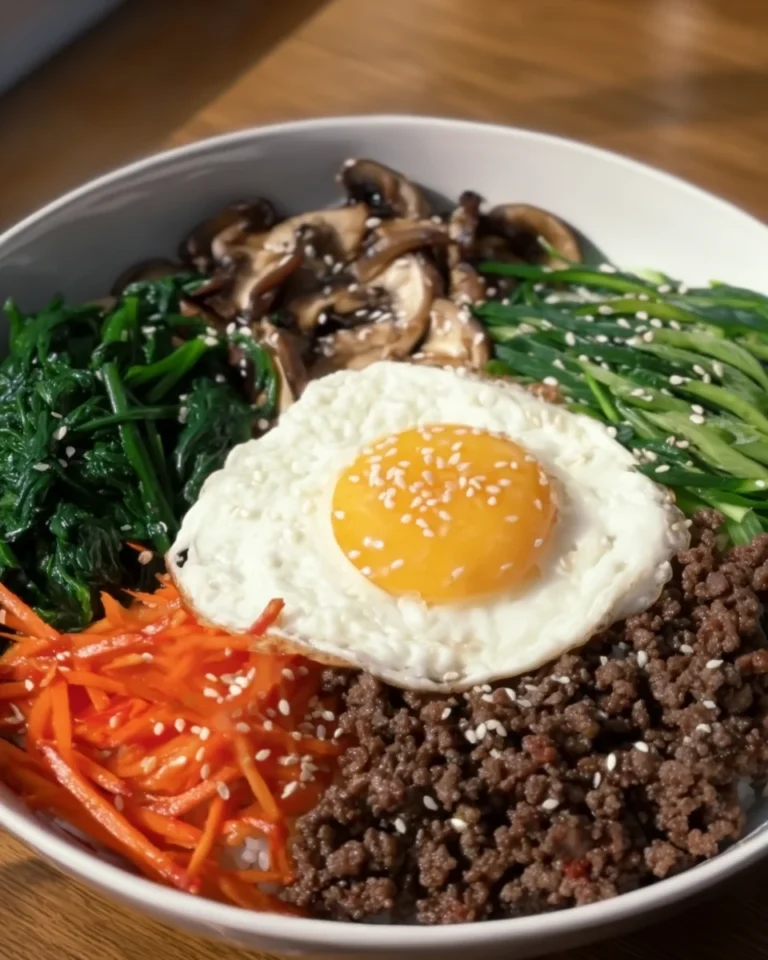
Bibimbap with Ground Beef
Bibimbap with Ground Beef is a vibrant and satisfying Korean rice bowl that brings together a medley of seasoned ground beef, colorful vegetables, and a fried egg, all topped with spicy gochujang sauce. This dish delivers a delightful blend of flavors and textures in every bite, making it perfect for busy weeknights or casual get-togethers. With its customizable nature, you can easily adjust the ingredients to suit your taste preferences. Enjoy the warmth and comfort of this one-bowl meal that embodies the essence of traditional Korean cuisine.
- Total Time: 35 minutes
- Yield: Serves 4
Ingredients
- 2 cups cooked white rice
- 1 pound ground beef
- 2 carrots (julienned)
- 1 zucchini (julienned)
- 1 cup spinach (blanched)
- 4 shiitake mushrooms (sliced)
- 4 eggs
- 4 tablespoons gochujang
- Sesame oil
- Soy sauce
- Salt
- Sugar
- Green onions
- Sesame seeds
Instructions
- In a skillet over medium heat, cook the ground beef with salt, pepper, soy sauce, sesame oil, and sugar until browned (about 5-7 minutes). Set aside.
- In the same skillet, sauté the carrots and zucchini in sesame oil for 3-4 minutes. Add mushrooms and cook for another 2 minutes. Stir in blanched spinach and cook for an additional minute before removing from heat.
- In a separate non-stick skillet, fry the eggs to your desired doneness.
- To assemble, place cooked rice in bowls and top with ground beef, sautéed vegetables, and fried eggs.
- Drizzle with gochujang and garnish with sesame seeds and chopped green onions.
- Prep Time: 15 minutes
- Cook Time: 20 minutes
- Category: Main
- Method: Frying
- Cuisine: Korean
Nutrition
- Serving Size: 1 serving
- Calories: 600
- Sugar: 5g
- Sodium: 850mg
- Fat: 30g
- Saturated Fat: 10g
- Unsaturated Fat: 15g
- Trans Fat: 0g
- Carbohydrates: 55g
- Fiber: 4g
- Protein: 30g
- Cholesterol: 220mg

Leave a Comment