








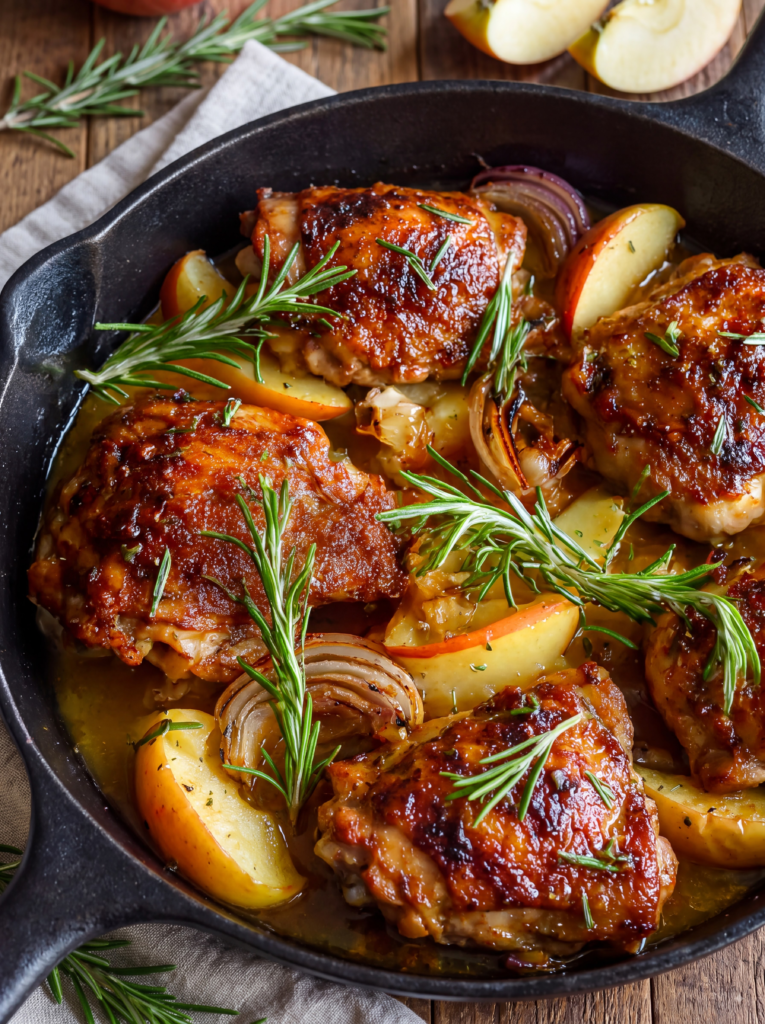
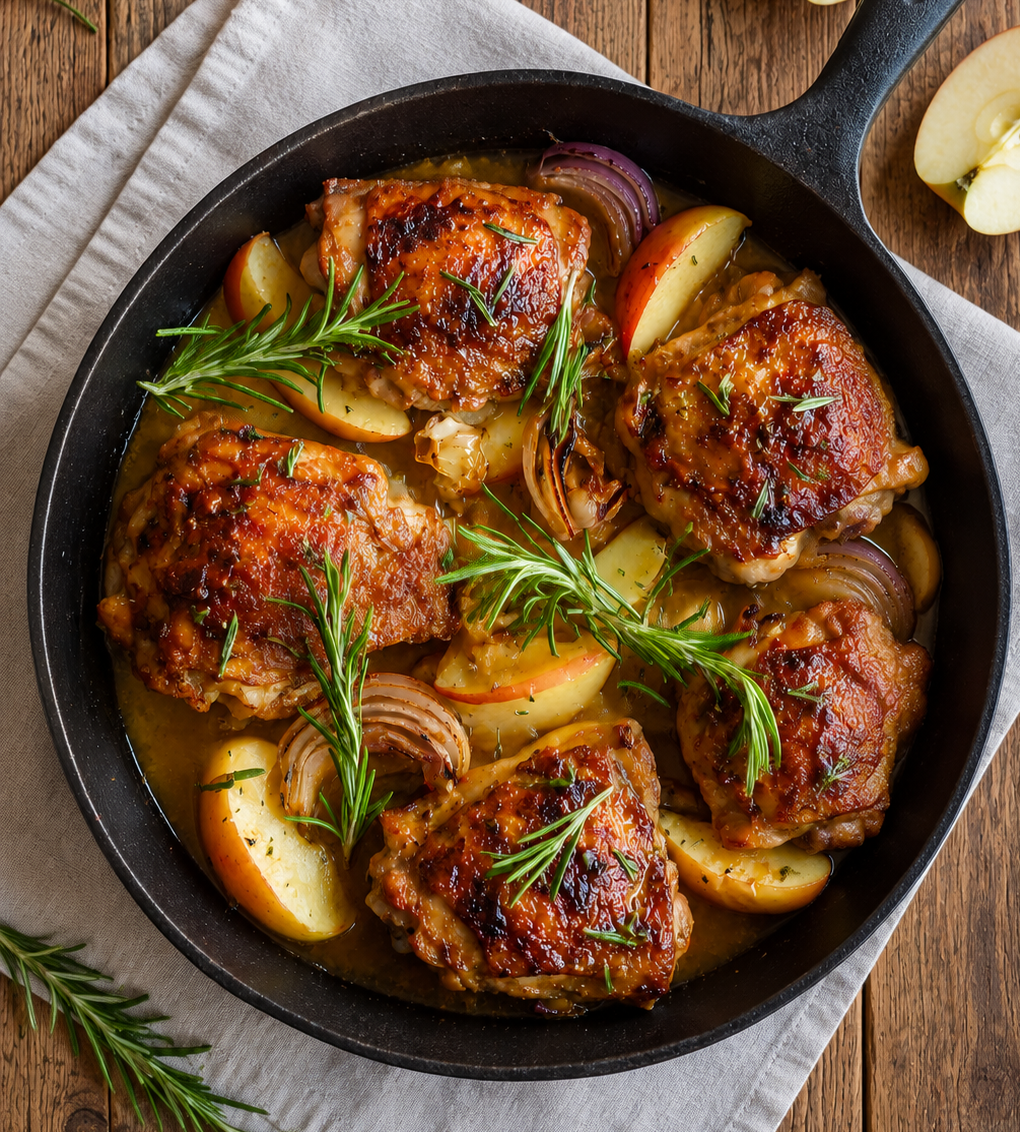
This Rosemary Apple Cider Chicken Recipe combines juicy chicken thighs, sweet apples, red onions, fragrant herbs, and a rich apple cider pan sauce in one comforting meal. It is the kind of dinner that fills the kitchen with warm, savory aromas and makes an ordinary evening feel extra cozy.
The chicken thighs are seasoned with garlic, onion powder, smoked paprika, thyme, and fresh rosemary before being seared until beautifully golden. They are then roasted with crisp apple slices and red onion wedges. Once the chicken is cooked, the flavorful bits left in the skillet are turned into a buttery apple cider and Dijon mustard sauce.
Want to save this recipe?
Just enter your email and get it sent to your inbox! Plus you'll get new recipes from us every week!
Although this dish looks impressive, the preparation is surprisingly simple. Most of the cooking takes place in one oven-safe skillet, which means fewer dishes and more flavor. Serve it with mashed potatoes, rice, roasted vegetables, or crusty bread for an easy fall-inspired dinner the whole family can enjoy.
Why You’ll Love This Rosemary Apple Cider Chicken
There are many reasons to add this apple cider chicken to your dinner rotation.
First, it uses familiar ingredients in a slightly unexpected way. Apples are often associated with desserts, but their natural sweetness also works beautifully in savory recipes. When roasted alongside chicken, onions, rosemary, and thyme, the apples become tender and absorb the savory flavors from the pan.
The recipe is also convenient. You can sear the chicken, roast the ingredients, and prepare the sauce in the same skillet. This one-pan cooking method keeps cleanup manageable while preserving all the browned bits that give the sauce its rich flavor.
Here are a few more reasons to try it:
- It is easy enough for a weeknight meal.
- The presentation is elegant enough for guests.
- Bone-in chicken thighs remain juicy and flavorful.
- The apple cider sauce is sweet, savory, and slightly tangy.
- The recipe can be prepared without wine.
- It pairs well with many simple side dishes.
- The ingredients are easy to find during the fall season.
Choosing the Right Chicken
Bone-in, skin-on chicken thighs are the best choice for this recipe. The skin becomes crisp and golden during searing, while the bone helps the meat remain moist as it roasts.
Chicken thighs also contain slightly more fat than chicken breasts, which gives them a richer flavor and makes them more forgiving during cooking. Even if they stay in the oven a few minutes longer than planned, they are less likely to become dry.
Try to choose thighs that are similar in size so they finish cooking at approximately the same time. If some pieces are much larger than others, check each one separately with a meat thermometer.
Boneless chicken thighs can also be used, but they will cook more quickly. Begin checking them after approximately 15 minutes in the oven. You can use chicken breasts if preferred, although their cooking time will depend on their thickness.
The Best Apples for Apple Cider Chicken
Honeycrisp apples are an excellent option because they have a crisp texture, a balanced sweet-tart flavor, and enough structure to hold their shape while roasting.
The apples should soften in the oven without turning completely into applesauce. This creates a pleasant contrast between the tender fruit, juicy chicken, and silky sauce.
Other suitable apple varieties include:
- Granny Smith: Tart and firm, making them ideal if you want to balance the sweetness of the cider.
- Pink Lady: Crisp with a combination of sweetness and acidity.
- Braeburn: Firm and slightly spiced, with a flavor that works well in savory recipes.
- Fuji: Naturally sweet and juicy.
- Jonagold: A good balance of tartness and sweetness.
Avoid very soft or mealy apple varieties because they may lose their shape during roasting. There is no need to peel the apples unless you prefer them that way. Leaving the peel on adds color and helps the slices remain intact.
Apple Cider Versus Apple Juice
Apple cider and apple juice are similar, but they are not always interchangeable in terms of flavor.
Apple cider is generally less filtered and has a deeper, more concentrated apple flavor. It often tastes fresh, slightly tart, and naturally spiced, even when no spices have been added. These qualities make it especially suitable for savory cooking.
Apple juice is usually clearer, sweeter, and more processed. Unsweetened apple juice can be used if apple cider is unavailable, but the sauce may taste sweeter and less complex.
Do not use apple cider vinegar as a direct substitute. Apple cider vinegar is much more acidic and would overpower the dish. A tiny splash may be added for acidity, but it cannot replace the full amount of apple cider.
Ingredients
For the Chicken
- 4–5 bone-in, skin-on chicken thighs
- 2 teaspoons onion powder
- 2 teaspoons garlic powder
- 1 teaspoon smoked paprika
- 1 teaspoon fresh thyme leaves
- 2 tablespoons chopped fresh rosemary
- Salt and black pepper, to taste
- 1 red onion, sliced into wedges
- 1–2 Honeycrisp apples, cored and sliced
- 2–3 fresh rosemary sprigs
- Olive oil, for searing
For the Apple Cider Sauce
- 4 tablespoons salted butter
- ¾ cup fresh apple cider
- ½ cup chicken broth or dry white wine
- 2 tablespoons Dijon mustard
- 3 garlic cloves, finely minced
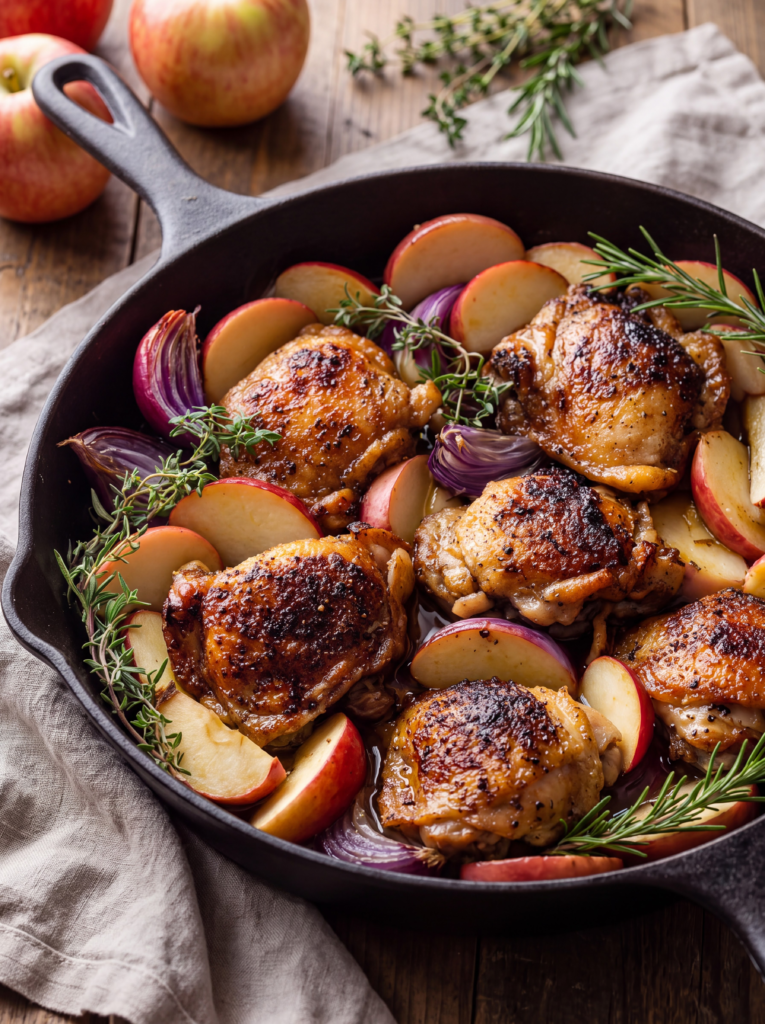
How to Make Rosemary Apple Cider Chicken
1. Preheat the oven
Preheat your oven to 425°F. A hot oven allows the chicken to finish cooking quickly while helping the apples and onions develop lightly caramelized edges.
Choose a large oven-safe skillet that can hold the chicken in a single layer. Cast iron works particularly well because it retains heat and creates an excellent sear.
2. Dry and season the chicken
Pat the chicken thighs thoroughly dry with paper towels. This step is essential for crisp skin. If the surface contains too much moisture, the chicken will steam instead of browning properly.
Place the thighs in a large bowl. Season them with onion powder, garlic powder, smoked paprika, thyme, chopped rosemary, salt, and black pepper.
Rub the seasonings over the skin and underneath the thighs so that each piece is evenly coated. If you have time, let the seasoned chicken rest for 15–20 minutes before cooking.
3. Sear the chicken thighs
Heat a small amount of olive oil in the oven-safe skillet over medium heat.
Once the oil is hot, place the chicken thighs in the skillet with the skin side facing down. You should hear a steady sizzle when the chicken touches the pan.
Allow the thighs to cook undisturbed for 3–4 minutes. Moving them too soon can prevent the skin from developing an even golden crust. Flip the chicken and sear the other side for another 3 minutes.
The thighs will not be fully cooked at this point. Searing is only meant to add color, crisp the skin, and build flavor in the skillet.
4. Add the apples and onions
Remove the skillet from the heat. Arrange the apple slices and red onion wedges around the chicken.
Avoid placing too many pieces directly over the chicken skin. Keeping the skin exposed to the oven’s dry heat will help it remain crisp.
Add two or three rosemary sprigs to the skillet. The heat will release their aromatic oils and lightly perfume the chicken, fruit, and sauce.
5. Roast until tender
Transfer the skillet to the preheated oven and roast for 20–25 minutes.
The chicken is ready when the thickest part reaches an internal temperature of at least 165°F. Insert the thermometer into the meat without touching the bone, as contact with the bone may give an inaccurate reading.
The apples should be tender but still hold their shape, while the onions should be soft and lightly caramelized.
6. Remove the chicken and fruit
Carefully remove the skillet from the oven. Remember that the handle will be extremely hot.
Transfer the cooked chicken, apples, and onions to a plate. Cover them loosely with aluminum foil to keep them warm while you prepare the sauce.
Do not wash or wipe the skillet. The browned bits remaining on the bottom are essential for the pan sauce.
7. Make the apple cider sauce
Place the skillet over medium-low heat. Add the butter and allow it to melt.
Pour in the apple cider and chicken broth or white wine. Add the Dijon mustard and minced garlic.
Whisk the ingredients together while gently scraping the bottom of the skillet. This process releases the caramelized pieces left from searing the chicken and incorporates them into the sauce.
Allow the sauce to simmer for several minutes. It should reduce slightly and develop a smooth, lightly thickened consistency. Taste and adjust the salt or pepper if necessary.
8. Return everything to the skillet
Place the chicken, apples, and onions back in the skillet. Spoon the warm apple cider sauce over the chicken thighs.
Allow everything to cook together over low heat for another minute or two. Serve immediately while the chicken is warm and the sauce is silky.
How to Get Crispy Chicken Skin
Crisp skin creates an enjoyable contrast with the tender chicken and soft roasted fruit. Follow these tips for better browning:
- Dry the thighs thoroughly before seasoning.
- Preheat the skillet before adding the chicken.
- Place the chicken skin-side down first.
- Do not move the chicken during the first few minutes of searing.
- Avoid overcrowding the skillet.
- Keep the skin exposed when adding the apples and onions.
- Do not pour sauce over the chicken until you are ready to serve.
If the skin loses some crispness after roasting, place the chicken under the broiler for one or two minutes. Watch it closely because it can burn quickly.
How to Thicken the Pan Sauce
The sauce should naturally thicken as it simmers and reduces. Butter and Dijon mustard also help create a smooth consistency.
If you prefer a thicker sauce, prepare a small cornstarch slurry by mixing:
- 1 teaspoon cornstarch
- 1 tablespoon cold water
Whisk the slurry into the simmering sauce and cook for another minute. Avoid adding dry cornstarch directly to the hot skillet because it may create lumps.
Keep in mind that the sauce will continue to thicken slightly as it cools.
Useful Recipe Tips
Use an oven-safe skillet
Using one skillet allows the recipe to move easily from the stovetop to the oven and back again. It also ensures that none of the flavorful pan drippings are lost.
Slice the apples evenly
Apple wedges that are similar in thickness will cook at the same rate. Very thin slices may become mushy, while extremely thick pieces may remain too firm.
Do not overcrowd the pan
The chicken needs direct contact with the skillet to develop a good sear. If your pan is too small, brown the thighs in batches before returning them all to the skillet.
Adjust the sweetness
The sweetness of apple cider varies between brands. Taste the sauce before serving. If it tastes too sweet, add a small splash of lemon juice. If it is too tart, stir in a teaspoon of honey or maple syrup.
Let the sauce reduce
The sauce needs several minutes of gentle simmering. If it seems thin, give it more time before reaching for cornstarch.
Use a meat thermometer
Chicken thigh size can vary considerably. A thermometer is the most reliable way to confirm that every piece is safely cooked.
Ingredient Substitutions
This recipe can be adjusted according to the ingredients you have available.
- Replace Honeycrisp apples with Granny Smith, Pink Lady, Braeburn, or Fuji.
- Substitute dried rosemary for fresh rosemary, using a smaller quantity.
- Use dried thyme if fresh thyme is unavailable.
- Replace chicken broth with dry white wine for a more complex sauce.
- Use unsalted butter and adjust the salt manually.
- Substitute whole-grain mustard for Dijon mustard for a more textured sauce.
- Use boneless chicken thighs and reduce the roasting time.
- Add a small amount of maple syrup if you prefer a sweeter fall flavor.
When using dried herbs, remember that their flavor is more concentrated. As a general rule, use approximately one-third of the fresh quantity.
What to Serve with Rosemary Apple Cider Chicken
The flavorful pan sauce makes this chicken ideal for serving with something creamy, starchy, or absorbent.
Mashed potatoes
Creamy mashed potatoes are one of the best side dishes for this recipe. They absorb the sauce and balance the sweetness of the apples.
Roasted potatoes
Crispy roasted potatoes provide a pleasant contrast to the tender chicken and fruit.
Rice or wild rice
White rice, brown rice, or a wild rice blend can turn the dish into a hearty and complete dinner.
Couscous
Couscous is quick to prepare and works well with the buttery cider sauce.
Green vegetables
Serve the chicken with sautéed green beans, roasted Brussels sprouts, steamed broccoli, or asparagus.
Crusty bread
A thick slice of warm bread is perfect for collecting every last spoonful of sauce.
Simple salad
A salad with mixed greens and a light vinaigrette adds freshness and acidity to the meal.
Making the Recipe Without Wine
White wine is completely optional. Chicken broth produces a delicious savory sauce and is the easiest alcohol-free substitute.
You may also combine chicken broth with a teaspoon of lemon juice to imitate some of the acidity normally contributed by wine. Add the lemon juice gradually and taste the sauce to make sure it does not become too sharp.
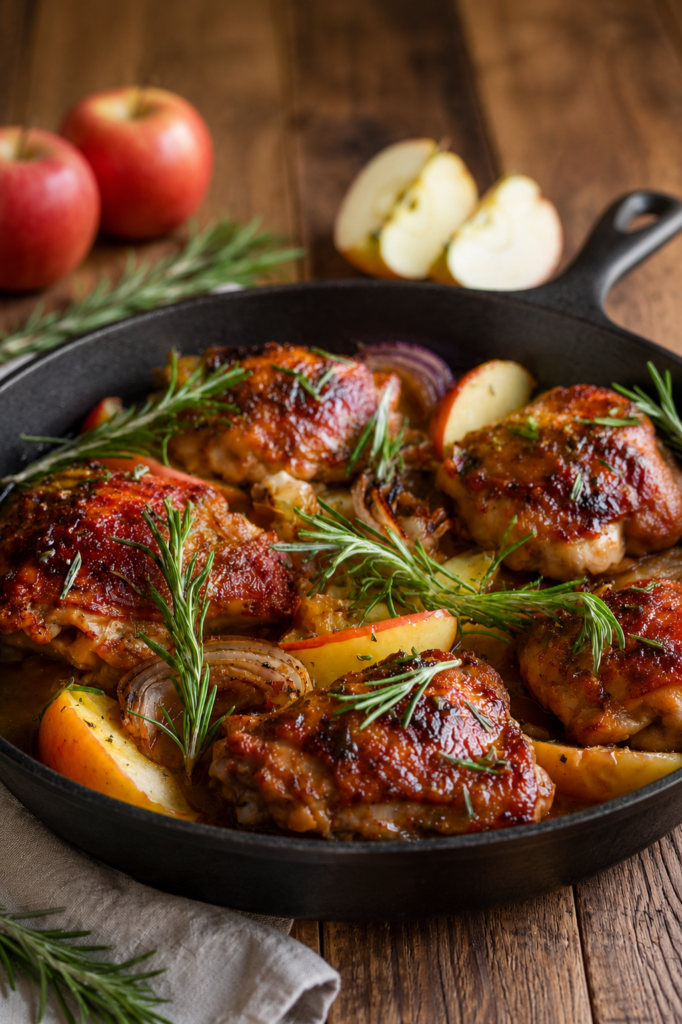
Storage Instructions
Allow any leftovers to cool before transferring them to an airtight container.
Store the chicken, apples, onions, and sauce in the refrigerator for up to four days. Keeping everything together helps prevent the meat from drying out.
The sauce may become thicker or separate slightly when refrigerated. This is normal because the butter and chicken fat solidify at lower temperatures.
How to Reheat Apple Cider Chicken
For the best results, place the leftovers in a covered skillet over medium-low heat. Add a splash of chicken broth or apple cider and warm gently until the chicken is heated through.
You can also reheat individual portions in the microwave. Cover the plate and heat in short intervals to avoid overcooking the chicken.
To restore some crispness to the skin, warm the chicken in a 350°F oven for approximately 10–15 minutes. Keep the sauce beneath or around the chicken rather than pouring it directly over the skin.
Can You Freeze Rosemary Apple Cider Chicken?
The cooked chicken and sauce can be frozen for up to two months. Place them in a freezer-safe container after they have cooled completely.
The apples and onions can also be frozen, although their texture will become softer after thawing. If texture is important to you, freeze only the chicken and sauce and prepare fresh apples when serving the leftovers.
Thaw frozen chicken overnight in the refrigerator before reheating.
Frequently Asked Questions
Can I use boneless chicken thighs?
Yes. Boneless thighs work well, but they cook faster than bone-in chicken. Begin checking their internal temperature after approximately 15 minutes in the oven.
Can I use chicken breasts?
Yes, but chicken breasts are leaner and can become dry if overcooked. Use breasts of similar thickness and check their temperature early.
Do I need to peel the apples?
No. The peel adds color, texture, and structure. You may peel them if you prefer a softer result.
Can I use apple juice?
Unsweetened apple juice can replace apple cider, although the sauce may taste sweeter and have a less concentrated flavor.
Why did my chicken skin turn soft?
The chicken may not have been dry enough before searing, or the pan may have been overcrowded. Pouring sauce directly over the skin too early can also soften it.
Why is my sauce too thin?
Allow it to simmer for several additional minutes. If it remains too thin, add a small cornstarch slurry.
Why is my sauce too sweet?
Add a little lemon juice, extra Dijon mustard, or chicken broth to balance the sweetness.
Can I prepare the recipe ahead of time?
You can season the chicken and slice the onions several hours in advance. Wait to cut the apples until closer to cooking so they do not turn brown. For the best texture, sear and roast the chicken shortly before serving.
Conclusion
This Rosemary Apple Cider Chicken Recipe is a delicious way to bring sweet and savory fall flavors together in one satisfying meal. The combination of golden chicken thighs, tender apples, caramelized red onions, rosemary, and tangy Dijon mustard creates a dinner that feels both comforting and special.
Preparing everything in one oven-safe skillet keeps the method straightforward while allowing every layer of flavor to remain in the finished sauce. Whether you serve it over mashed potatoes, alongside roasted vegetables, or with a simple piece of crusty bread, the apple cider pan sauce makes every bite memorable.
It is an excellent recipe for a cozy family dinner, a relaxed weekend meal, or an autumn gathering with friends. Once you see how naturally apples, rosemary, and savory chicken work together, this may become one of your favorite cold-weather dinners.
Print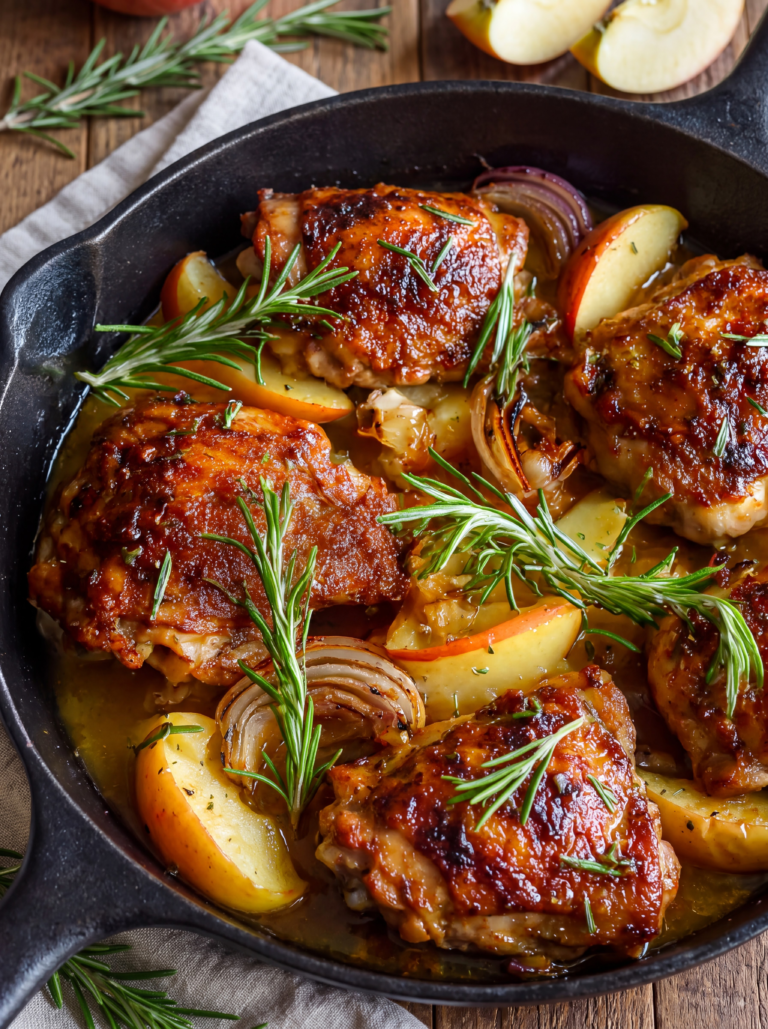
Rosemary Apple Cider Chicken Recipe
- Total Time: 45 mins
- Yield: 5 servings 1x
Ingredients
For the Chicken
- 4–5 bone-in, skin-on chicken thighs
- 2 teaspoons onion powder
- 2 teaspoons garlic powder
- 1 teaspoon smoked paprika
- 1 teaspoon fresh thyme leaves
- 2 tablespoons fresh rosemary, chopped
- Salt and black pepper, to taste
- 1 red onion, cut into wedges
- 1–2 Honeycrisp apples, cored and sliced
- 2–3 fresh rosemary sprigs
- 1 tablespoon olive oil
For the Apple Cider Sauce
- 4 tablespoons salted butter
- ¾ cup apple cider
- ½ cup chicken broth or dry white wine
- 2 tablespoons Dijon mustard
- 3 garlic cloves, finely minced
Instructions
- Preheat the oven to 425°F.
- Pat the chicken thighs dry with paper towels. Season them with onion powder, garlic powder, smoked paprika, thyme, chopped rosemary, salt, and black pepper.
- Heat the olive oil in a large oven-safe skillet over medium heat.
- Place the chicken skin-side down in the hot skillet. Sear for 3–4 minutes without moving it, then flip and cook the other side for approximately 3 minutes.
- Remove the skillet from the heat. Arrange the apple slices, red onion wedges, and rosemary sprigs around the chicken.
- Transfer the skillet to the oven and roast for 20–25 minutes, or until the thickest part of the chicken reaches an internal temperature of 165°F.
- Transfer the cooked chicken, apples, and onions to a plate and keep them warm.
- Return the skillet to the stovetop over medium-low heat. Add the butter, apple cider, chicken broth or white wine, Dijon mustard, and minced garlic.
- Whisk the sauce while scraping the browned pieces from the bottom of the skillet. Simmer for 3–5 minutes, or until it begins to thicken.
- Return the chicken, apples, and onions to the skillet. Spoon the apple cider sauce over the chicken and serve warm.
Notes
- Dry the chicken skin thoroughly before seasoning to help it become crisp.
- Honeycrisp, Granny Smith, Pink Lady, or Braeburn apples work well.
- Boneless chicken thighs can be used, but reduce the oven time to approximately 15–20 minutes.
- Chicken broth can completely replace the white wine.
- For a thicker sauce, mix 1 teaspoon of cornstarch with 1 tablespoon of cold water, then whisk it into the simmering sauce.
- Store leftovers in an airtight container in the refrigerator for up to four days.
- Prep Time: 15 mins
- Cook Time: 30 mins
- Category: Main Dish
- Cuisine: American
Nutrition
- Calories: 257 Kcal
- Fat: 13g
- Carbohydrates: 15g
- Protein: 17g